
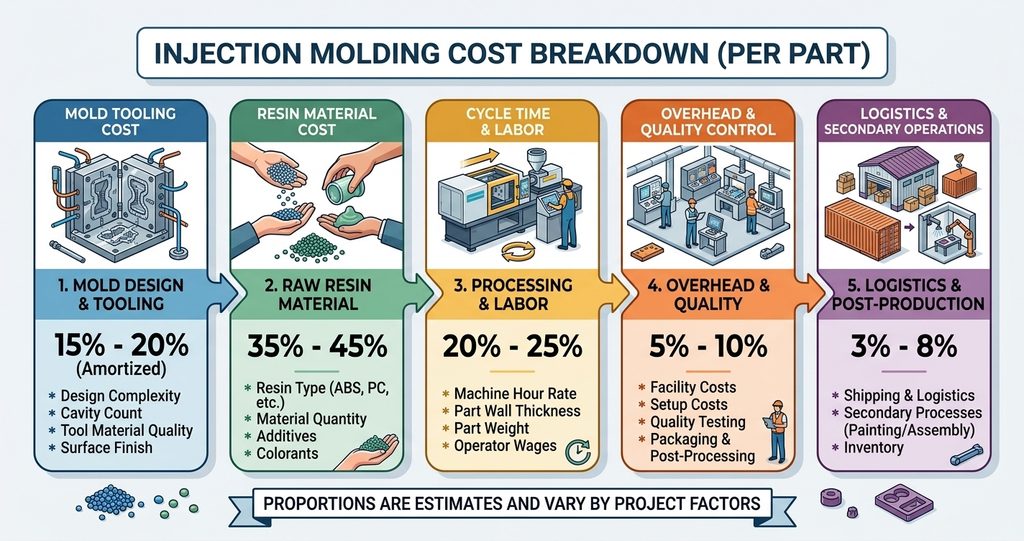
Cost control is a top priority for every manufacturing project. If you want to reduce injection molding cost, you do not need to cut quality corners. By optimizing product design, raw material selection, and tooling structures, you can achieve significant savings while maintaining high manufacturing standards.
Here are 7 field-tested strategies from the engineering team at SOLIDCO MOULD to help you reduce injection molding cost effectively.
1. Simplify Mold Design Through DFM Optimization
Complex mold designs drive up manufacturing costs. Features like deep undercuts, sharp internal corners, and uneven wall thickness increase machining time and tooling difficulty. Implementing a thorough Design for Manufacturability (DFM) review early in the process helps simplify part geometry, reducing overall mold-making costs by 15% to 30% without sacrificing functional performance.
2. Choose the Right Resin to Reduce Injection Molding Cost
High-performance specialty engineering plastics (like PEEK or Ultem) can dramatically inflate production budgets. Select your resin based on actual operating temperature, mechanical strength requirements, and environmental exposure. For standard structural parts, common materials like PP or ABS often work perfectly at a fraction of the price. Choosing the correct material is one of the quickest ways to reduce injection molding cost per unit.
3. Use Industry Standard Mold Components
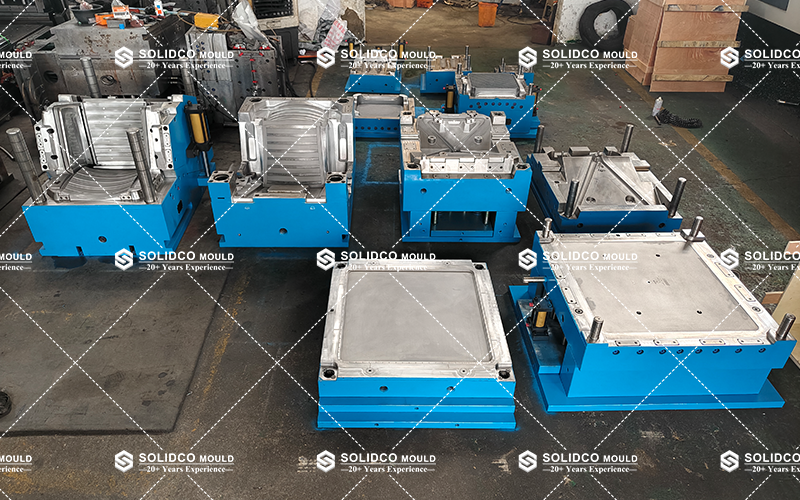
Custom tooling components take longer to manufacture and cost significantly more to repair or replace. Utilizing standardized mold bases, guide pins, and bushings reduces initial tooling expenses and streamlines future maintenance. We partner with top suppliers like LKM and JUFAN to integrate standard components into every mold we produce.
4. Optimize Cavity Numbers Based on Production Volume
Tooling layout directly impacts both upfront tooling investments and long-term piece-part costs:
- Single-cavity molds: Require less initial capital, making them ideal for prototyping or low-volume production runs.
- Multi-cavity molds: Cost more upfront but deliver significantly lower unit costs during high-volume production.
Calculating the right cavity balance based on your annual output expectations ensures you do not over-invest in tooling.
5. Eliminate Unnecessary Secondary Operations
Post-processing activities like painting, electroplating, and manual assembly quickly accumulate extra labor expenses. Where possible, design functional textures and mechanical features directly into the mold tool:
- Use in-mold texturing (VDI standards) instead of painting.
- Incorporate snap-fit designs to eliminate threaded fasteners and manual assembly.
- Integrate structural ribs to maintain strength while reducing wall thickness.
6. Extend Tooling Life with Regular Maintenance
Replacing damaged molds is a major unplanned expense that stalls production. Scheduled professional maintenance can extend mold life by 30% to 50%, keeping long-term capital expenditure low. Regular cleaning, anti-rust treatments, and timely component replacements prevent costly tool overhauls down the line.
7. Partner with a One-Stop Injection Molding Manufacturer
Sourcing design, tooling, and plastic part production from separate suppliers leads to markup costs, logistics overhead, and communication delays. Working with an all-in-one manufacturing partner eliminates middleman markups, cuts freight costs, and accelerates overall turnaround time.
Conclusion
Effective strategies to reduce injection molding cost come from smart engineering and thoughtful design, not cheap materials. Contact SOLIDCO MOULD today to get a free DFM analysis and custom cost-optimization plan for your upcoming project.
- 💬WhatsApp / Phone: +86-13386587702
- 📧 [email protected]
- 📘 https://www.facebook.com/profile.php?id=61573977142909
- 📷 https://www.instagram.com/koizhang07


